
Search
Search results for
We found
12 results for you
-

The Wood Properties and Qualities of Three South African-Grown Eucalypt Hybrids
Item type: Journal Article • Journal: South African Forestry Journal • Authors: F.S. Malan --- Division of Forest Science and Technology,Hybridisation is becoming an increasingly important technique in tree breeding to improve yields, adaptability and wood quality. In this study, sample material from crosses of Eucalyptus grandis with E. tereticornis, E. camaldulensis and E. urophylla established on sites of which... -

Transfer of rust resistance genes from Triticum species to common wheat
Item type: Journal Article • Journal: South African Journal of Plant and Soil • Authors: G.F. Marais --- Department of Genetics, South Africa Z.A. Pretorius --- Department of Plant Sciences, South Africa A.S. Marais --- Department of Genetics, South Africa C.R. Wellings --- , AustraliaA programme aiming to transfer leaf rust resistance genes identified in a collection of wild Triticum species was initiated in 1993. In 2000, 25 promising backcross populations were available, 19 of which bred true for resistance. Seedlings of the above... -

Phenotypic characterisation in interspecific and intergeneric hybrids of the clariid catfishes Heterobranchus longifilis, Clarias gariepinus and Clarias anguillaris in Nigeria
Item type: Journal Article • Journal: African Journal of Aquatic Science • Authors: AA Akinwande --- Department of Fisheries Technology, Nigeria OA Fagbenro --- Department of Fisheries and Aquaculture, Nigeria OT Adebayo --- Department of Fisheries and Aquaculture, NigeriaThirty-nine morphometric and five meristic comparisons were carried out on 12-month-old interspecific and intergeneric hybrids of the African clariid catfishes Heterobranchus longifilis, Clarias gariepinus and Clarias anguillaris from experimental earthen ponds in Nigeria. Canonical discriminant analysis accounted for 89.4% of... -
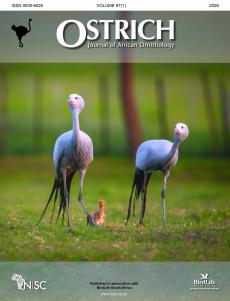
Hybridisation between the Common Buzzard Buteo buteo buteo and the North African race of Long-legged Buzzard Buteo rufinus cirtensis in the Strait of Gibraltar: prelude or preclude to colonisation?
Item type: Journal Article • Journal: Ostrich: Journal of African Ornithology • Authors: Javier Elorriaga --- , Spain Antonio-Román Muñoz --- , SpainNatural hybridisation in Old World buzzards (Buteo) is an uncommon phenomenon with important ecological implications. This genus constitutes an intricate radiation of genetically poorly differentiated raptors whose taxonomic classification is a frequent subject of debate. We report the first case... -
Nile tilapia invades the Lake Malawi catchment
Item type: Journal Article • Journal: African Journal of Aquatic Science • Authors: MJ Genner --- School of Biological Sciences, UK E Connell --- School of Biological Sciences, UK A Shechonge --- School of Biological Sciences, UK A Smith --- Department of Biological Sciences, UK J Swanstrom --- School of Biological Sciences, UK S Mzighani --- Tanzania Fisheries Research Institute (TAFIRI), Tanzania A Mwijage --- Tanzania Fisheries Research Institute (TAFIRI), Tanzania BP Ngatunga --- Tanzania Fisheries Research Institute (TAFIRI), Tanzania GF Turner --- School of Biological Sciences, UKThe Lake Malawi/Nyasa catchment contains over 835 endemic cichlid fish species. This unique biodiversity has made it widely recognised as one of the world's most significant freshwater ecosystems. Here we report the first occurrence records of two invasive tilapiines, Oreochromis... -

Fibre optic microarrays for the detection and enumeration of harmful algal bloom species
Item type: Journal Article • Journal: African Journal of Marine Science • Authors: DM Anderson D Kulis D Erdner S Ahn D WaltHarmful algal blooms (HABs) are a serious threat to coastal resources, causing impacts ranging from the contamination of seafood products with potent toxins to mortalities of wild and farmed fish and other marine animals. As the threat from HABs has... -
Enhanced detection levels in a semi-automated sandwich hybridisation assay using a peptide nucleic acid (PNA) signal probe
Item type: Journal Article • Journal: African Journal of Marine Science • Authors: L Connell J Ray W Litaker P TesterA peptide nucleic acid (PNA) signal probe was tested as a replacement for a typical DNA oligonucleotide-based signal probe in a semi-automated sandwich hybridisation assay designed to detect the harmful phytoplankton species Alexandrium tamarense. The PNA probe yielded consistently higher... -
High-latitude connectivity of the scleractinian coral Acropora tenuis in the south-western Indian Ocean, identified using nuclear intron and mitochondrial sequence data
Item type: Journal Article • Journal: African Journal of Marine Science • Authors: B Chiazzari --- School of Life Sciences, South Africa A Macdonald --- School of Life Sciences, South Africa M Schleyer --- , South AfricaAll scleractinian corals in southern Africa occupy the high-latitude margins of their biogeographical range, with some straddling multiple biogeographical regions. Connectivity among these populations is essential to maintain genetic diversity, and thus their conservation value. Therefore, the aim of this... -

Phylogenetic tests of a Cercopithecus monkey hybrid reveal X-chromosomal polyphyly of C. cephus and emerging patterns in the cephus species group radiation
Item type: Journal Article • Journal: African Zoology • Authors: Anthony J Tosi --- Department of Anthropology, USAA captive Cercopithecus nictitans × C. cephus male was examined at loci on the X- and Y-chromosomes as a test of previously described phylogenetic methods for identifying hybrid Cercopithecus monkeys. The results confirm the reliability of such assays, indicating that... -
Understanding the translocation dynamics of Nile tilapia (Oreochromis niloticus) and its ecological consequences in East Africa
Item type: Journal Article • Journal: African Zoology • Authors: Papius Dias Tibihika --- National Fisheries Resources Research Institute, Uganda Harald Meimberg --- Institute for Integrative Nature Conservation Research, University of Natural Resources and Life Sciences Vienna (BOKU), Austria Manuel Curto --- Institute for Integrative Nature Conservation Research, University of Natural Resources and Life Sciences Vienna (BOKU), AustriaThe Nile tilapia (Oreochromis niloticus) is the second-most economically important fish species in East African countries (EAC), surpassed only by the Nile perch (Lates niloticus). It is the most-farmed freshwater fish species in EAC and the second-most-farmed worldwide. Currently, in... -
Conservation status and threats to lovebirds: knowledge gaps and research priorities
Item type: Journal Article • Journal: Ostrich: Journal of African Ornithology • Authors: Sascha Dueker --- University of KwaZulu-Natal, South Africa Sandi Willows-Munro --- University of KwaZulu-Natal, South Africa Michael R Perrin --- University of KwaZulu-Natal, South Africa Yilma D Abebe --- , Ethiopia Nathaniel ND Annorbah --- University of Environment and Sustainable Development, Ghana Esther W Mwangi --- National Museums of Kenya, Kenya Ireene R Madindou --- National Museums of Kenya, Kenya Wondimagegnehu Tekalign --- Wolaita Sodo University, Ethiopia Emiliano Mori --- Istituto di Ricerca sugli Ecosistemi Terrestri, Italy Tiwonge I Mzumara --- , United Kingdom Chris Brown --- , Namibia Ursula Bryson --- , Namibia Henry Ndithia --- National Museums of Kenya, Kenya Tim Dodman --- , United Kingdom Henriette van der Zwan --- North-West University, South Africa Rencia van der Sluis --- North-West University, South Africa Chaona R Phiri --- Manchester Metropolitan University, United Kingdom Abigail Karimanzira --- , Zimbabwe Rowan O Martin --- , United KingdomLovebirds (genus Agapornis of family Psittaculidae) are a group of small, colourful parrot species endemic to sub-Saharan Africa and Madagascar, two-thirds of which are considered to have declining populations. Effective conservation efforts are hampered by a lack of information, particularly... -
Evolution, population structure and morphology of the African Black Duck Anas sparsa and Yellow-billed Duck A. undulata
Item type: Journal Article • Journal: Ostrich: Journal of African Ornithology • Authors: Philip Lavretsky --- University of Texas at El Paso, United States Ramsey Russell --- , United States Sara Gonzalez --- University of Texas at El Paso, United States Vergie M Musni --- University of Texas at El Paso, United States Alexis Díaz --- Centro de Ornitología y Biodiversidad (CORBIDI), Peru Joshua I Brown --- University of Texas at El Paso, United StatesBiological conservation requires a fundamental understanding of evolutionary history and established contemporary population genetics. Here, we sequenced mitochondrial DNA (mtDNA) and thousands of nuclear loci across individuals of the African Black Duck Anas sparsa and Yellow-billed Duck A. undulata to...