
Search
Search results for
We found
2 results for you
-

Leaf biomechanics as a potential tool to predict feeding preferences of the geometric tortoise Psammobates geometricus
Item type: Journal Article • Journal: African Zoology • Authors: Ronald A. Balsamo --- Department of Biology, U.S.A Margaretha D. Hofmeyr --- Chelonian Biodiversity and Conservation, Department of Biodiversity and Conservation Biology, South Africa Brian T. Henen --- Chelonian Biodiversity and Conservation, Department of Biodiversity and Conservation Biology, South Africa Aaron M. Bauer --- Department of Biology, U.S.AFood and non food plant characteristics were studied for the geometric tortoise, Psammobates geometricus, to test the hypothesis that feeding preferences in tortoises may be influenced by the mechanical properties of plant leaves. Twelve focal feeding observations made between 8... -
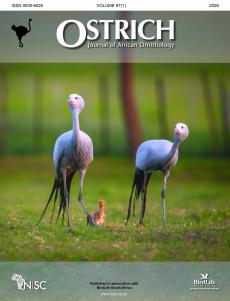
Retention of the flight-adapted avian finger-joint complex in the Ostrich helps identify when wings began evolving in dinosaurs
Item type: Journal Article • Journal: Ostrich: Journal of African Ornithology • Authors: Joel D Hutson --- Department of Biological Sciences, USA Kelda N Hutson --- Earth Science, USAThe functional anatomies of avian finger joints have never been compared with those of the basal avian Archaeopteryx lithographica or maniraptoran theropod dinosaurs. These startling oversights are due to unfamiliarity of the joints outside of highly specialised studies of bird-wing...